Our ratings comprise a company’s financial strength and likelihood of insolvency, benchmarked against businesses of a similar size. They are designed to support confident, risk‑based credit decisions.
 GOLD: 80-100
Companies with a gold score of 80-100 are the healthiest, meaning they are the least likely to go insolvent, and are rated as the top 15-18% of all companies that are of similar size.
These companies have only the strongest key financial ratios, show little signs of known insolvency indicators, and have an excellent history of filing accounts and compliance on time. They have healthy all-round financials and the chance of a gold company failing is less than 0.1%. For these companies, we recommend open credit.
 SILVER: 60-80
Companies with a silver score of 60-80 generally maintain strong financial ratios but may show slightly higher gearing or marginally lower liquidity, efficiency, or profitability compared to top performers. They represent approximately the next 28% of companies within their size band in terms of financial stability and likelihood of failure.
Although the probability of failure remains very low (around 0.3%), these companies are somewhat less stable than those rated gold and are more likely to shift to a different rating over time. Unless performance trends decline significantly, any downturns are expected to be modest, with no major legal notices anticipated. Open credit is still considered appropriate for these businesses.
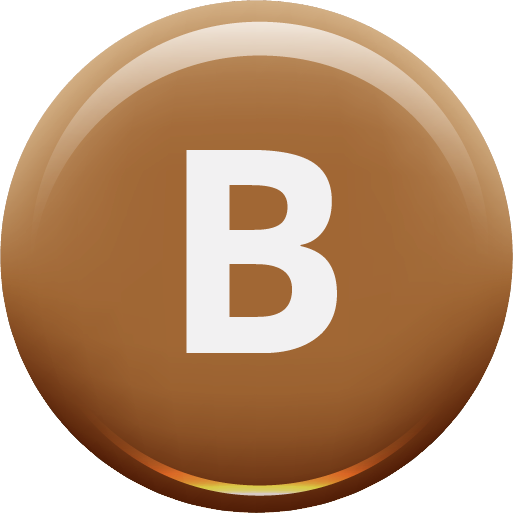 BRONZE: 40-60
Companies with a bronze score of 40-60 still have a low chance of failure (0.7%), but are not considered as financially stable as silver and are more likely to move down to a lower rating. These companies make up the next 40% of businesses, the majority of those scored in the RFA system.
These companies may show a mix of below-average financial ratios, which results in a lower overall score, though they remain stable enough to pass the scorecard. The weaker areas can include gearing, efficiency, liquidity, or profitability.
Typically, some financial indicators meet threshold requirements, while others fall short, leading to a reduced score, more so than in Silver-rated companies. Overall, these businesses are in acceptable financial health, with no major adverse information known. There may be some history of legal notices, but they are generally viewed as a fair trade risk and remain suitable for open credit.
 ONE RED FLAG: 20-40
Companies with a score of 20-40 are rated with 1 Red Flag and have a higher likelihood of failure than the national average (around 1%) and sit among the weakest 14% of all businesses in the rating system. These companies do not pass the scorecard and fail to meet minimum threshold requirements across most key financial measures.
In some cases, businesses may maintain a 1 Red Flag rating over an extended period without failing, often due to financial support from connected parties through unsecured loans. While such funding can help them stay operational, it typically makes their balance sheets appear weaker. There may also be evidence of recent or significant legal notices. The overall risk level is elevated, so suppliers are advised to obtain suitable assurances or guarantees before extending credit.
 TWO RED FLAGS: 10-20
Companies with a score of 10-20 are rated with 2 Red Flags and have a significantly higher likelihood of failure. They fall within the weakest 20% of all businesses in the rating system, though their position is not as critical as those rated 3 Red Flags. These companies do not pass the scorecard and fail to meet the minimum threshold requirements across most key financial categories. There is often evidence of recent or significant legal notices, and the overall risk level is considered very high.
 THREE RED FLAGS: 0-10
Companies with a score of 0-10 are rated with 3 Red Flags and are among the weakest 1% of all businesses that fail the scorecard. These companies do not meet the minimum threshold requirements across most, if not all, key financial measures. They typically show clear signs of financial deterioration, including poor gearing and liquidity, and there is often evidence of recent or significant legal notices. Many also have recent county court judgments of material value. Overall, these companies are at a very high risk of insolvency.

INACTIVE
Although the company is recorded as active in its legal status, the absence of up‑to‑date accounts or significant assets suggests that it is not currently trading.
 NEWLY INCORPORATED
This company is newly incorporated and have not yet filed any accounts. As a result, we do not have the data required to score them, and they remain in this temporary status until they have filed their first accounts, at which point we are able to give them a provisional rating.
 PROVISIONAL SILVER
Provisional ratings (Silver, Bronze, 1 Red Flag, or 2 Red Flags) apply to companies that have filed only one set of accounts. These businesses are assessed using our provisional scorecards and assigned a temporary rating from the four categories listed above. This is considered a ‘soft’ rating and remains in place until a second set of accounts is filed, at which point the company receives a ‘firm’ rating through the standard scoring process.
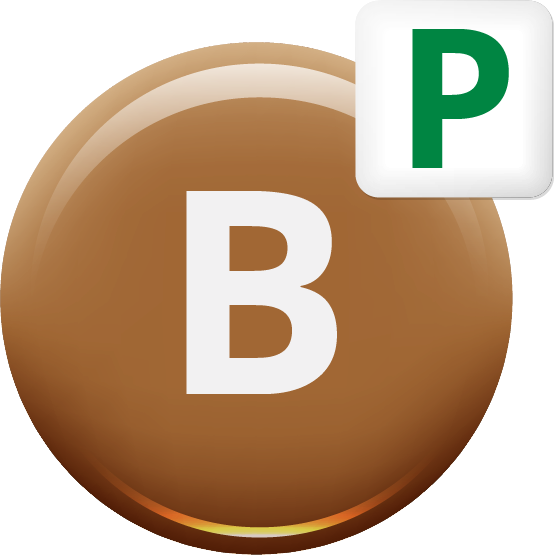 PROVISIONAL BRONZE
Provisional ratings (Silver, Bronze, 1 Red Flag, or 2 Red Flags) apply to companies that have filed only one set of accounts. These businesses are assessed using our provisional scorecards and assigned a temporary rating from the four categories listed above. This is considered a ‘soft’ rating and remains in place until a second set of accounts is filed, at which point the company receives a ‘firm’ rating through the standard scoring process.
 PROVISIONAL ONE RED FLAG
Provisional ratings (Silver, Bronze, 1 Red Flag, or 2 Red Flags) apply to companies that have filed only one set of accounts. These businesses are assessed using our provisional scorecards and assigned a temporary rating from the four categories listed above. This is considered a ‘soft’ rating and remains in place until a second set of accounts is filed, at which point the company receives a ‘firm’ rating through the standard scoring process.
 PROVISIONAL TWO RED FLAGS
Provisional ratings (Silver, Bronze, 1 Red Flag, or 2 Red Flags) apply to companies that have filed only one set of accounts. These businesses are assessed using our provisional scorecards and assigned a temporary rating from the four categories listed above. This is considered a ‘soft’ rating and remains in place until a second set of accounts is filed, at which point the company receives a ‘firm’ rating through the standard scoring process.
 STRIKE OFF
A striking-off action has been recorded at Companies House against this company or limited liability partnership, which could be either voluntary or initiated by Companies House. We recommend that you view the full record, and if credit is being considered, take particular care and request full disclosure to confirm the company’s current trading status.
 PRE INSOLVENT
This company is at a very high risk of failure in the short term and is regarded as being in a pre‑insolvency position. In light of this elevated risk, extending credit in the company’s name would generally not be recommended and, if considered at all, should only proceed with extreme caution and appropriate security.
 INSOLVENT
This company has entered a formal insolvency process; please review the full record for details. All credit transactions should cease immediately, and no further credit should be extended.
 DISSOLVED
This company has been dissolved by Companies House and no longer exists. If you are currently trading with a business using this name, we recommend that you: review your position immediately, obtain a full disclosure of affairs before entering into any further transactions, and confirm that you are dealing with the correct active company for all future trading.
 NOT TRADING
According to information filed at Companies House, this company is currently registered as non-trading. Should credit be applied for in this company’s name, we recommend that you take appropriate caution and obtain full disclosure of its trading status.
Was this article helpful?
That’s Great!
Thank you for your feedback
Sorry! We couldn't be helpful
Thank you for your feedback
Feedback sent
We appreciate your effort and will try to fix the article